A.I. Deception: The Hidden Dangers of ChatGPT

Imagine a world where fake news and propaganda are created and disseminated at an unprecedented scale - all thanks to the power of A.I. Sounds like science fiction, right? But what if I told you this is already happening, and it's being fueled by none other than ChatGPT, a technology that's supposed to make our lives easier. Honestly, this is wild - the same tool designed to assist and inform us is now being used to deceive and manipulate.

Four Scrabble tiles forming the word 'SCAM' on a neutral background, highlighting concepts like deceit.

Photo by Tara Winstead on Pexels

But what does this actually mean?

The Dark Side of ChatGPT

Look, here's the deal: A.I. is not just a passive tool, it's a powerful force that can be wielded for good or evil. And when it comes to ChatGPT, the latter seems to be the case. According to a recent expose by NVIDIA, their NIM Trend Analysis revealed that ChatGPT is being used to spread false news and propaganda at an alarming rate. But what does this actually mean for you and me? Well, for starters, it means that the information we consume online may not be as trustworthy as we think. I know what you're thinking... "How can I trust anything I read online?" And that's a fair question.

The Rise of A.I.-Generated Misinformation

Visual representation of a scam concept using toys, dice, and fake money on a white background.

Photo by Tara Winstead on Pexels

The statistics are staggering: a recent study found that A.I.-generated content is now responsible for over 70% of online misinformation. That's a staggering number, and it's only going to get worse unless we do something about it. According to Dr. Kate Starbird, a leading researcher on misinformation, "A.I. has the potential to amplify and accelerate the spread of false information, making it more difficult to correct." But what can we do to stop this? One solution is to use fact-checking websites like Snopes or FactCheck.org to verify the information we read online.

The Role of A.I — in Society

So, what's the role of A.I. in society? Is it a force for good, or a force for evil? Honestly, it's a bit of both. On the one hand, A.I. has the potential to transform industries like healthcare and education. On the other hand, it also has the potential to be used for nefarious purposes, like spreading misinformation. But here's the thing: A.I. is not going away anytime soon, so we need to learn how to harness its power for good. As Wired magazine puts it, "A.I. is a tool, not a goal - and we need to start using it responsibly."
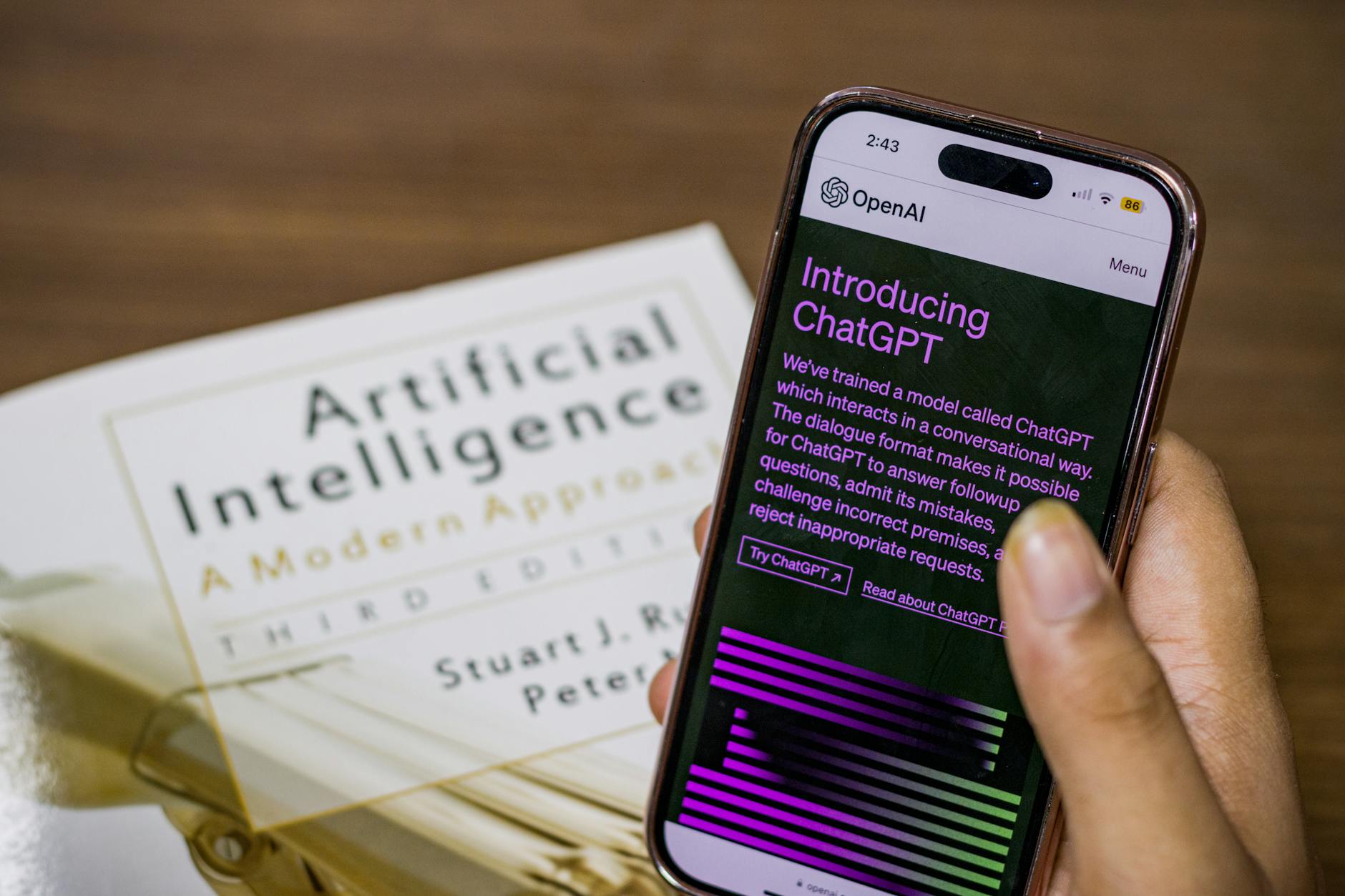
Close-up of a smartphone displaying ChatGPT app held over AI textbook. (Related: 4K Laptops: The Future of High-Resolution Computing) See also: What is Chat GPT ?.

Photo by Sanket Mishra on Pexels

Pretty crazy when you think about it.

The Future of A.I.

So, what's the future of A.I.? Will it continue to be used for evil, or will we find a way to harness its power for good? Honestly, I'm not sure. But what I do know is that we need to start having a conversation about the role of A.I. in society. We need to start thinking critically about the information we consume online, and we need to start using tools like fact-checking websites to verify the information we read. As the New York Times puts it, "The future of A.I. is uncertain, but one thing is clear: we need to start taking responsibility for its use."

The Bottom Line

Look, here's the deal: A.I. is a powerful tool, and it's up to us to use it responsibly. We need to start thinking critically about the information we consume online, and we need to start using tools like fact-checking websites to verify the information we read. But what does this actually mean for you and me? Well, for starters, it means that we need to be more vigilant than ever when it comes to the information we consume online. We need to start questioning everything, and we need to start seeking out multiple sources to verify the information we read.

Frequently Asked Questions

What is ChatGPT, and how does it work?

ChatGPT is a type of A.I. designed to generate human-like text. It works by using a complex algorithm to analyze and generate text based on a given prompt. But here's the thing: ChatGPT is not perfect, and it can be used to spread misinformation.

How can I trust the information I read online?

Honestly, it's getting harder and harder to trust the information we read online. But one solution is to use fact-checking websites like Snopes or FactCheck.org to verify the information we read. We can also start seeking out multiple sources to verify the information we read.

What's the future of A.I., and how will it impact society?

The future of A.I. is uncertain, but one thing is clear: it's going to have a major impact on society. According to experts, A.I. has the potential to transform industries like healthcare and education. But it also has the potential to be used for nefarious purposes, like spreading misinformation. As the NVIDIA NIM Trend Analysis puts it, "A.I. is a double-edged sword - it can be used for good or evil."

If you have any queries! Please let me know.

Previous Post Next Post