Perseverance Rover Mars Sample Return 2026 Updates: NASA's Next Giant Leap

The Perseverance Rover is on a mission to change our understanding of the planet Mars forever. As we await the Mars sample return in 2026, the excitement is building. Honestly, this is wild - we're talking about potentially finding signs of life on the red planet. But what does this actually mean for space exploration and our quest to understand the universe?

What's the Significance of the Perseverance Rover Mission?

The Perseverance Rover has been exploring Jezero Crater since February 2021, collecting samples that could hold the key to understanding Mars' past. With the NASA and SpaceX collaboration, this mission is a giant leap for space exploration. Look, here's the deal - this mission could be the most significant discovery in the history of space travel.

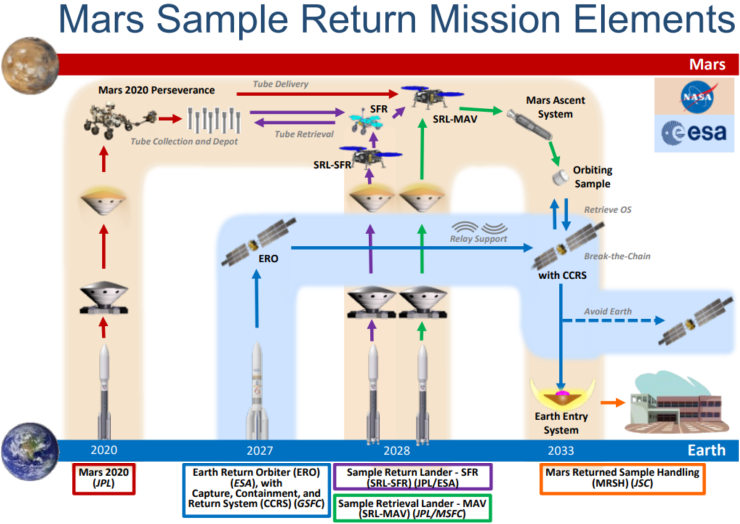
Presentation at the final workshop on sampling in the Perseverance mission

Image: NASA/JPL-Caltech / Wikimedia Commons (Public domain)

But here's where it gets interesting.

How Does the Sample Return Process Work?

The Mars sample return process involves several complex steps. First, the Perseverance Rover collects samples using its drill and stores them in sample tubes. Then, a sample return orbiter will retrieve the samples and bring them back to Earth. But what are the challenges involved in this process? I know what you're thinking - how do they ensure the samples remain intact and uncontaminated?

April 21, 2022
This illustration shows a concept for multiple robots that would team up to ferry to Earth samples collec You might also like: NASA Artemis 3 Mission Updates August 2026: Space Exploration Revival.

Image: NASA/ESA/JPL-Caltech / Wikimedia Commons (Public domain) (Related: Llama 3.4 Update: What's New in AI Coding)

See where this is going?

What Are the Potential Discoveries from the Mars Samples?

The Mars samples could hold the key to understanding the planet's past. Scientists believe that Jezero Crater was once home to a lake, which could have supported life. The samples could contain biosignatures, such as organic molecules or fossilized microorganisms. This raises some interesting questions - what would it mean if we found signs of life on Mars? How would it change our understanding of the universe?
NASA revealed significant changes to two of its flagship planetary science missions at today’s Space Science Week meetin (Related: CRISPR Gene Editing Therapy FDA Approval 2026: A New Era in Health)

Image: NASA/Thomas Zurbuchen / Wikimedia Commons (Public domain)

What's the Current Status of the Perseverance Rover Mission?

As of now, the Perseverance Rover is still exploring Jezero Crater and collecting samples. The NASA team is working tirelessly to ensure the success of the Mars sample return mission. According to NASA, the mission is on track to meet its 2026 deadline. But what are the potential risks and challenges involved? Let's take a look at some of the key statistics: * The Perseverance Rover has traveled over 12 miles on Mars * The rover has collected over 10 samples from Jezero Crater * The Mars sample return mission is estimated to cost over $2 billion

How Can You Stay Updated on the Perseverance Rover Mission?

To stay updated on the Perseverance Rover mission, you can follow NASA on social media or visit their website. You can also check out the Mars Exploration Program website for the latest updates. Then again, you can watch live streams of the mission on YouTube. Some other resources include: * SpaceX updates on the mission * Mars exploration news from reputable sources * Planet facts and trivia to test your knowledge

FAQ: What is the Perseverance Rover's Primary Objective?

The Perseverance Rover's primary objective is to explore Jezero Crater and collect samples that could hold the key to understanding Mars' past.

FAQ: How Long Will the Perseverance Rover Mission Last?

The Perseverance Rover mission is expected to last until 2026, when the Mars sample return is scheduled to take place.

FAQ: What Are the Potential Risks and Challenges Involved in the Mission?

The potential risks and challenges involved in the mission include contamination of the samples, technical failures, and the harsh Mars environment.

If you have any queries! Please let me know.

Previous Post Next Post